Nitch Ladies

From centuries-old forest charters and smuggling legends to towering medieval parade giants and ancient solstice gatherings, Wiltshire is steeped in fascinating folklore and living traditions. Discover the stories behind some of the county’s best-known customs – and find out where you can still experience them today.
Every January, traditionally around Twelfth Night or Old Twelfth Night (17 January), communities across Wiltshire gather in orchards to keep the ancient rural custom of wassailing alive. Derived from the Old English toast waes hael (“be in good health”), the ceremony is held to wake the sleeping apple trees, ward off evil spirits, and ensure a bountiful cider harvest for the year ahead.
During a traditional Wiltshire wassail, crowds process through the orchard by lantern light accompanied by folk musicians, morris dancers, and the Wassail King and Queen. After singing traditional wassail songs, cider-soaked toast is placed in the branches of the oldest tree to feed the robins – believed to be the guardians of the orchard – while warm spiced cider is poured onto its roots. The ceremony ends with as much noise as possible, as revellers bang pots, pans, and drums to frighten away any lingering bad spirits. You can attend wassails at Keevil near Trowbridge and at Avebury village.
Oak Apple Day takes place in Great Wishford on 29th May. The villagers ceremonially assert their right to gather wood and rear cattle in Grovely Wood which is owned by the Wilton Estate. During the ceremony, the men of the village go very early to Grovely and cut an oak bough which is then decorated with ribbons and displayed from the church tower.
To maintain the charter which allows them to collect wood, a small group of women from the village must go to Salisbury Cathedral and re-assert their right. Dressed in traditional costume the Nitch Ladies dance in The Close to symbolise the women that protested when the Lord of the Manor threatened to revoke their right to gather wood. Nitches are the bundles of dry wood that they carry.
A service is held inside the cathedral and the refrain “Grovely, Grovely and all Grovely” is shouted as the villagers claim the forest. The banner they carry says “Unity is Strength”.
After the ceremony, the villagers return to the village for a procession, to dance around the maypole and celebrate to brass band music at the village fair.
View photos from Oak Apple Day 2012
The term Moonraker (a person born and bred in Wiltshire) is said to have come about at The Crammer pond in Devizes. The story goes that the locals were unhappy about the high taxes they were expected to pay on whisky, brandy and gin and so they smuggled it. One group were surprised by excisemen and quickly hid their stash in the pond. To hide the fact that they had hidden their barrels, the men pretended to be raking the water for cheese. The excisemen thought the men to be simple country folk who mistakenly believed the reflection of the moon to be cheese and so they passed on, leaving the smugglers to recover their alcohol.
Collingbourne Ducis also lays claim to the Moonraker’s pond.
The winter solstice occurs on the shortest day of the year and the summer solstice on the longest day. Druid, pagans and others gather at Stonehenge for a ceremonial welcoming of the sun.
English Heritage manages the site and allows open access to both events. Thousands of people come from all over the world but the summer solstice is far more popular than the winter solstice.

Sometimes druid weddings are performed and at the summer solstice in 2011, Canadians Pavel and Tanya had a handfasting ceremony.

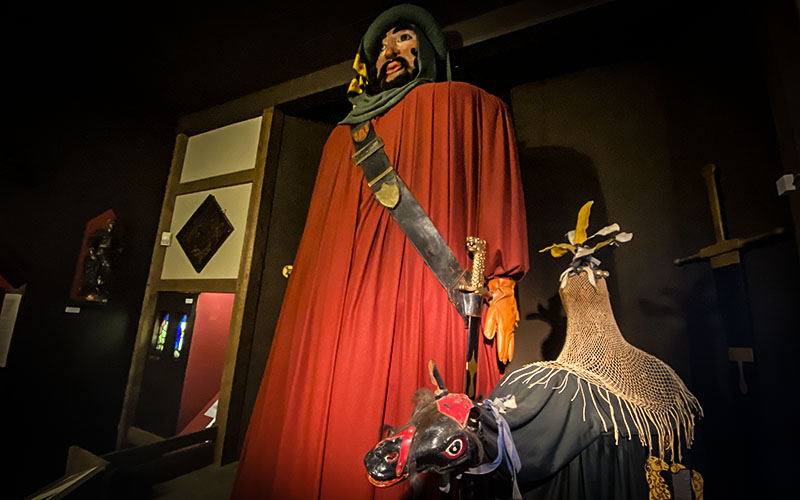
One of Wiltshire’s oldest and most unusual civic traditions is the Salisbury Giant (also known as St Christopher) and his mischievous hobby-horse companion, Hob-Nob. Dating back to at least the 15th century, the 12-foot-tall wooden-framed figure originally belonged to the Salisbury Guild of Tailors and was carried through the city streets by a single person hidden beneath his robes during Midsummer parades, royal coronations, and major national celebrations.
Dancing ahead of the Giant to clear the crowds was Hob-Nob, a snapping wooden horse-like creature fitted with real horsehair and hob-nail teeth that gave a sharp nip to anyone standing too close. Purchased by The Salisbury Museum in 1873 for 30 shillings (£1.50), the original pair made their final public street appearance for Queen Elizabeth II’s Silver Jubilee in 1977. Today, the historic originals are on permanent display inside The Salisbury Museum, while a working replica still parades through the city on special occasions.